Author: BernardusMuller

  • The Launch of My Journey into AI Art: bernardusmuller.art

    The Launch of My Journey into AI Art: bernardusmuller.art

    Today, May 28, 2023, marks the day I officially step into the world of AI art with the launch of my website, bernardusmuller.art. For many, this might just be a new site on the internet, but for me, it’s a platform to share my voice and vision, now manifested as digital art.

    Living with ALS since 2010, the disease has gradually deprived me of my ability to move and speak, but it has not taken away my desire to create and communicate. The launch of this website is an accomplishment that speaks volumes about the human spirit’s ability to adapt and innovate in the face of adversity.

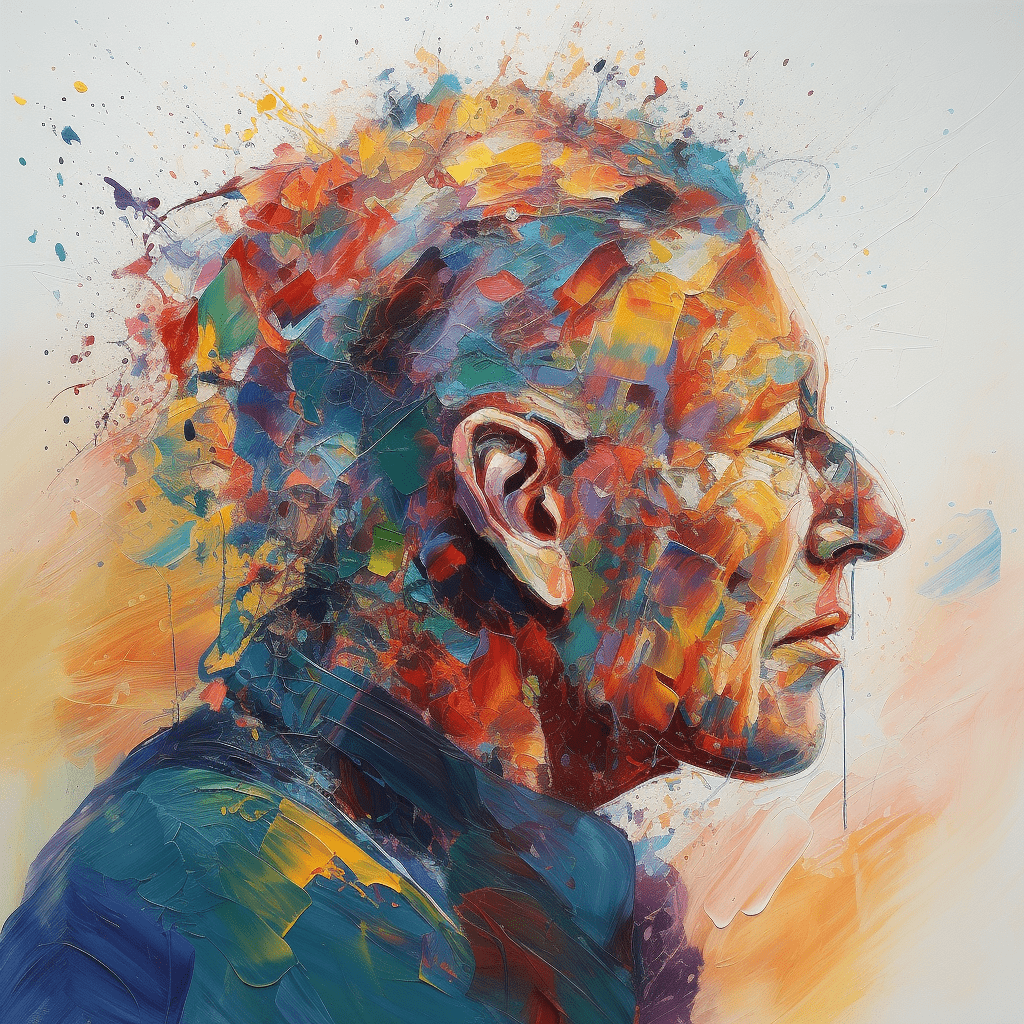
    Navigating life with ALS, I’ve learned to leverage technology, specifically an eye-gaze computer and AI. These tools not only became my voice but also my paintbrush, my canvas. Using these, I’ve been able to create unique pieces of art that are reflections of my journey and experiences.

    Today, I am excited to share with you my inaugural AI art collection: “The Treeway AI Art Collection”. This one-of-a-kind series of ten pieces is inspired by the interweaving themes of life’s resilience and the relentless progression of disease. Each artwork is a manifestation of creativity meeting technological innovation, representing a unique visual narrative that communicates my journey and perspective.

    It gives me immense joy to see these pieces of art come alive, and to be able to share them with the world. Each artwork is not just a product of AI, but also carries a message of hope, resilience, and human potential to adapt and create, even when confronted with significant challenges.

    The launch of this website isn’t just about sharing art; it’s about changing narratives, opening conversations, and inspiring others to see beyond limitations. It signifies the fusion of art, technology, and the human spirit, and a new journey I’m embarking on.

    I invite you to join me in this journey, to explore the intersection of art, AI, and human resilience. Visit the art gallery to experience the Treeway AI Art Collection. Your support means the world to me, and I can’t wait to see where this journey takes us.

    • Bernard Muller
  • Revival Through AI: My Journey from ALS Patient to AI Art Creator

    Revival Through AI: My Journey from ALS Patient to AI Art Creator

    Life. It’s an unpredictable tapestry, woven with countless threads of joy, sorrow, triumph, and adversity. As an ALS patient, I have become acutely familiar with the unique threads of my tapestry – the trials, the resilience, and, recently, the incredible revival I’ve experienced, thanks to advances in technology.

    The battle with ALS is relentless, as those familiar with the condition will know. When I was first diagnosed, I was overwhelmed by the grim prognosis. But I resolved to take every opportunity to fight and to continue experiencing life to its fullest. Recently, one of the most significant of these opportunities came in the form of going on a ventilator.

    For many, going on a ventilator might signal a defeat, but for me, it was a turning point. I started to have more energy, more breath in my lungs to keep me going. I realized that while my body may have limitations, my spirit does not. There was still so much to live for, so much to explore. My focus shifted from merely surviving to thriving.

    One of the ways I’ve chosen to thrive is through embracing technology to its fullest extent. Going on a ventilator was just the beginning. From there, I began to harness a variety of technologies to improve my quality of life. I utilized an eye-gazed computer that allows me to interact with the world through the movement of my eyes. It has been a window to the world for me, allowing me to communicate, learn, and create.

    It wasn’t long before I stumbled upon the concept of artificial intelligence (AI). What a fascinating, expansive field! I dedicated myself to becoming an autodidact, learning all I could about this breakthrough technology. The more I learned, the more I realized its immense potential. And with my newfound energy, I had plenty of time to dive in.

    And dive in, I did. I began to create AI art using my eye-gazed computer. I developed a method of communicating with the AI through eye movements, directing it to create visual masterpieces based on my vision. These creations are now proudly displayed in my collection on OpenSea, a testament to the boundless possibilities of technology and human resilience.

    In many ways, I’ve found joy, a renewed spirit, and a deep sense of fulfillment in this unexpected journey as an AI artist. Each day is a new opportunity to explore how technology can enhance my life further, how it can continue to weave the vibrant threads of my tapestry.

    Now, I wake up every day with a renewed sense of purpose. I’ve become a part of something bigger than myself, a part of a community that transcends the limitations of physical ability and disease. With every piece of AI art I create, I am not just expressing my creativity but also telling a story of resilience, courage, and revival. And I believe that if my journey can inspire just one person to keep fighting, to keep exploring, to keep creating despite the odds, it will have been worth it.

    I share my story with the world as proof that our spirits are indomitable. In the face of adversity, we can adapt, learn, and create beautiful things. I am a living testament to that, an ALS patient who found revival in the realms of technology and AI. So, I encourage you, no matter what battles you’re facing, embrace your potential, harness it, and let it fuel your journey to something extraordinary.

    Every adversity we face can be the catalyst for a new beginning, a new way of being, a new life. So here’s to embracing the wonders of technology, to creating beautiful AI art, and to the indomitable human spirit that makes it all possible. My revival continues, and so does my journey. Each day is a new canvas, waiting for the touch of my gaze to bring it to life. And I wouldn’t have it any other way.

    “Someone can and will find a way, why not be that one”

  • Beyond the Ice Bucket

    Beyond the Ice Bucket

    congress-blog

    Five years ago, I was unexpectedly struck by amyotrophic lateral sclerosis, or ALS. I have dedicated my life to moving mountains in what was, at first, an unfamiliar field. My entrepreneurial career included real estate, flowers, oil and shipping. But the past five years had challenged me with the steepest learning curve I’ve ever faced: my disease.

    During my crash course on ALS, often called Lou Gehrig’s disease, I noticed that regulatory review and approval seriously hindered the process of drug development and results in missed deadlines.

    Although I am an academic drop out, I’ve learned to appreciate science as the backbone of evidence-based theories. However, being a patient with a killer disease means never ruling out miracles – the desire for a cure drives everything I’ve come to appreciate the passion and compassion of people within the ALS community – the patients, researchers and companies that underpin that drive.

    I’ve also learned to apply the skills I developed in my previous careers to drive innovation in drug development. This has led to the development of what is currently one of the largest genetic datasets of ALS patients on the globe. The shift in focus from technology-driven to disease-driven drug development is necessary in an industry ruled by science but governed by non-disclosure agreements. The heart of next generation drug development lies here – with innovative research approaches that include the experiences of the patients that the industry is focused on helping.

    Today, real innovation increasingly comes as a result of patients’ involvement in drug development. Admittedly, most pharma and biotech companies have patient-centric advocacy embedded in their strategy and mission statements, but patients have traditionally formed just a small part of the drug development equation. The patient voice should echo in all parts of the development path, including governing bodies, ethical committees and expert panels. I’d go as far to say that if that was done 50 years ago, we probably would not have been able to increase fivefold the time it takes for a drug to come to market. Fortunately, this is starting to change.

    Patients are increasingly aware of their ability to play a significant role in the biotech R&D paradigm. Social phenomena like the Ice Bucket Challenge and increased patient involvement to accelerate drug approvals have served as good examples for both the industry and the patient community. We should not omit science and data from advocacy campaigns. R&D should remain a scientific process, not one driven solely by popular vote. However, placing patients at the center of the drug development process can help spur changes and direct attention to unmet medical needs.

    Industry and government also have responsibility to recognize this shift. Pending U.S. legislation like 21st Century Cures Initiative and industrywide conferences such as the BIO International Convention provide opportunities for patients to make themselves heard, and for stakeholders to recognize these new roles.

    I founded a biotech company that aims to address a deadly disease with innovative, transparent research, genetic data analysis and accelerated therapy development. Our for-profit status allows us to apply general business rules to attract capital and advance our mission. We still face the boundaries obstructing fast development tracks, but this generation of patients, “patients 3.0,” will eventually break down traditional boundaries and help streamline and expedite drug development. With more than 5,600 people diagnosed with ALS each year, the sooner, the better.

    Bernard Muller

    This blog was published as the Congress Blog on The Hill on June 10th 2015

  • Sterke Leeuw

    Sterke Leeuw

    sterke leeuw
    Richard Branson’s “screw it, let’s do it” is typerend voor ondernemerschap, gewoon doen en de onmogelijkheden oplossen wanneer ze zich voordoen. Ikzelf zeg altijd dat ondernemen draait om 3 dingen; mensen, geld en omstandigheden. En het is vooral het laatste dat bepaalt of je succes hebt. Je aanpassen aan de altijd weer veranderende omgeving, niet alleen zakelijk, maar ook in je privéleven.De manier waarop ik omga met het feit dat ik ALS heb, wordt gekenmerkt door aanpassingen en dus vooral mij te focussen op de dingen die ik nog wel kan. Dat lijkt eenvoudig gezegd, maar dat is het natuurlijk niet. De ziekte heeft voor iedereen een andere beleving, voor de één een kwelling, voor sommigen ook een openbaring, een zinbeleving, van waar draait het eigenlijk om in het leven. Die relativering kom ik bij heel veel mede patiënten tegen en verklaart ook die enorme saamhorigheid tijdens evenementen voor ALS.Mijn hele leven draait om mogelijkheden, ook wanneer onmogelijkheden aan de horizon ontstaan, probeer ik het negatieve om te buigen in het positieve, vaak daarbij denkend dat het leven maakbaar is. Maar ik ben ook een realist, wetend dat er zoiets als het lot bestaat. En als dan de koers van je leven een andere wending neemt, kan je maar beter je kompas pakken om in ieder geval bij te sturen.

    Ik ben niet godsdienstig, maar geloof sterk in de evolutieleer van Darwin, die zegt: “Het zijn noch de sterkste, noch de meest intelligente die overleven, maar degene die zich het beste aanpassen” en zo is het in mijn ogen.

    Toch kent iedereen die angst en dat soms hulpeloze gevoel van die volgende dag, die siddering die je voelt als iets simpels je niet meer lukt, overslaand in woede en frustratie. Het omarmen van die angsten, dat gevoel accepteren is een overwinning op jezelf…!

    In de top 5 van grootste angsten in Nederland staan; de dood en spreken in het openbaar, nou beide heb ik inmiddels wel overwonnen en daarbij ben ik trots op mezelf. Die trots wil ik graag breken in 1500 stukjes en geven aan al mijn mede patiënten, want ik weet dat niet iedereen even sterk kan en wil zijn. Toch schuilt in deze gastblog ook weer een diepere betekenis omdat LeoForte staat voor “sterke leeuw” en laat dat nu precies mijn sterrenbeeld zijn en figuurlijk betekent het een zeer zware beproeving ondergaan, nou dat noem ik dan in ons geval een understatement…

    Maar laten we vooral vechten als leeuwen en de omstandigheden aangrijpen om het onmogelijke, mogelijk te maken…

    ——————————————————————————————–
    Deze gastblog is geschreven voor mijn mede patient Ries van der Velden en
    zijn stichting Leoforte. Kijk voor meer info op http://www.stichtingleoforte.nl


  • Building bridges…

    Building bridges…

    HiRes

    Someone recently called me a “patient” entrepreneur. Yes, I am an ALS patient, but no, I am definitely not patient! 🙂

    The things I undertake to battle my disease can be described as entrepreneurial. However, it’s just who and what I am. Do I have a choice? I certainly do, although I can’t help being me. Don’t put me in a wheelchair and ask me to just stare out the window. It would probably break me… Don’t sit me in front of a TV. I’d probably just switch that crap off! Don’t give me face time with politicians unless you want me to tell them what their doing wrong. I’ll lecture businesses on what to do and how to spend their money, and scientists on what they should try to discover. Now, surround me with my fellow patients and I immediately feel a compassion that fuels my drive to find a cure. Facing my family fills me with love—something that everyone needs in their life!

    On my journey, I encounter stigmas towards patients, rigid social dogmas and oftentimes, outdated scientific paradigms. I am surprised at how our society has embedded fear into the roots of the very stakeholders that should be striving to make a difference, instead choosing compliance and governance over innovation and revolution. What has happened to the revolutionary mind of mankind that brought us to where we are today? How can we call ourselves innovators, when in reality, we’re just maintaining the status quo?

    Cultural and national differences are amongst the challenges I face in my endeavours, but our disease is global. It has no borders and certainly needs a more cosmopolitan approach. One of the lessons I try to share with others is that despite the adversity being faced, cultural norms dictate that people are always approaching it from different angles. We must be compassionate, but not blind. In my opinion, this is the only way to fill the pre-judged gaps in our opinions.

    As human beings, we are the only species that can feel both love and compassion. We have evolved beyond the confines of natural selection where the weak are left to themselves and the strong survive. When we combine compassion with our will to survive, we can overcome many issues and hell yes, even make the weak stronger!

    Right is not always right, and wrong is not always wrong. Hence, why I keep building bridges…