Author: BernardusMuller

  • Freedom of Thought

    Freedom of Thought

    When I was 11 years old, I decided to take a stand, not just for myself, but for others as well. I jumped up on a crowded lunchroom table at boarding school, declaring that we hated the food we were being served and demanded better. Even though I had a right to an opinion at that age, unfortunately I didn’t feel like I was taken very seriously. However, a few years later the school did adjust some of their policies and even more importantly…the menu! I guess I’ve always had a bit of a problem with authority. 😉

    The reason I attended boarding school was because my parents and I lived on an inland barge that they also owned and operated. There were simply no other education options available. The years I spent at boarding school helped form who I am today and how I think about the world. Not that I am a socialist by any means, but I do believe in freedom of speech, freedom of choice, and most importantly in the freedom of thought. I also believe that despite one ‘s talent, not everyone can grow up to become a world-famous CEO.

    I have taken care of myself my entire life. Everything I do, I do with passion, focus, and a drive for success. Looking back, I have ticked many of the boxes on my bucket list, which I have of course extended over time. I am grateful for the life I’ve lived and happy with the choices I’ve made. That being said, I despise injustice, selfishness, and jealousy. In my heart, I want to improve the world around me and have a strong opinion about how to go about it.

    Having been confronted with a terminal disease, I have noticed that people bolster me with their love, and admire me for my strength and positive attitude in coping with my condition. However, I also sometimes feel a sort of skepticism, as if they have given up on me, thinking, “It’s too late for you mate, sorry…”

    Then my child’s feelings come back to mind and I get angry and more motivated to fight, but also disappointed that today’s society has individualized people to such an extreme. We have become more egocentric, not necessarily selfish, but in a way, we’ve forgotten what life is all about. We let our thoughts and fears be dictated by the media and have buried our inner philosophers. 2,400 years ago, Plato said, “There are two things a person should never be angry at, what they can help, and what they cannot.”

    I strongly believe in freedom of choice. This is what distinguishes us from all other living species. If a person wants to voluntary end his life, because he does not want to suffer from his disease any longer, that is his justified, individual choice. If others want to fight as long as they can, the same rule applies. Plato also said, “Death is not the worst that can happen to men.”

    People living with ALS/MND eventually lose the ability to speak, and in essence a bit of their freedom. However there is one thing we will never lose for as long as we live and is not affected by our disease. Therefore I now say that “silence is the fuel for our freedom of thought.”

    One Man
  • Knocking on doors…

    Knocking on doors…

    Social Media and Rare Diseases

    Like I said in my blog post entitled “Extraordinary Measures“, it’s all about BIG data. How can you make it easier to be discovered online? Especially when you want to connect with fellow patients, raise awareness for your cause, and raise more money for your disease?

    Here’s a short overview of what’s out there and some ideas to get started…

    Facebook

    In the world of social media, Facebook seems like a logical place to start; you already have a network of friends (and their friends) that can help you get more “Likes.” From a practical perspective, you have a built-in targeted audience who likes your page and is interested in you. What more could you want?

    There are over 150 Facebook pages devoted to ALS/MND. I probably haven’t found them all, but the point is that most of them are not connected to each other. The reach is limited to separate, local communities instead of a larger global one. To complicate matters, you also have to be very specific with regards to the content on your profile page and bio, otherwise your page won’t be found. It is a terrific medium for interaction and providing information, but you unfortunately still miss people that are not using the social network.

    Facebook also seems to be the wrong platform for fundraising. Maybe this will change when the platform introduces a payment system in 2014. Unfortunately, many Facebook users are only “viewers” and not “participators.” Judging from my own experience with my community of contacts, only about one third of my friends are active, with the rest (a dormant majority) only watching passively and occasionally interacting.

    Twitter

    The infamous 140 character message board of Twitter is not only useful for sharing news and pushing opinions to your followers, but also even handier for interacting with fellow patients and other advocates. However, it is crucial that you make yourself known to tweeters by using useful hashtags in your messages, having an informative bio, and keeping an up-to-date description of yourself on your profile. Otherwise you might remain hidden anonymously amongst the other 300 million users, sending roughly half a billion messages every day. I use programs like HootSuite and SocialBro to optimise my hashtags, to find fellow patients, advocates and associations, and to effectively target tweeters interested in other rare diseases and chronic illnesses.

    I can see that many users are not used to these tools, but rest assured that the amount of tweeters on rare diseases correlates with the real world prevalence of our conditions. This means that becoming a trending topic is hard work.  On www.symplur.com you can find the healthcare hashtags that are most used on twitter. It’s a very good start for you to have a look at how you can improve your chances of being found online.

    As a fundraising platform Twitter is useful to grab attention, but due to the structure of the tool, you always have to refer tweeters to an external site.

    Blogging

    There are many blogging sites, but the three I would like to mention here are Blogger, Tumblr and WordPress. Honestly, I only started blogging a couple of weeks ago. Why? Well, I guess before now, I wasn’t ready for it…and after doing some research, I ended up with choosing WordPress. The simple user interface and layout attracted me, but it is all very personal. You have to find the one which suits your needs. With blogging you can write your story and share your opinions in more than 140 characters…

    Video

    If you want to raise awareness, video is the way to do it! If a picture is worth a thousand words, a video is worth even more. You can show the world how relentless and cruel your disease is, that it needs everyone’s attention, and that a cure must be found…but hey, remember again, it’s all about the BIG data!

    Everyone wants to make a viral video like “Gangnam Style” and “Charlie Bit My Finger.” Or maybe not? Think twice about who your target audience is and who you really want to reach. If you want to reach the entire world, take another look at my blog “Extraordinary Measures.”

    Email 

    Most people think that email is over, but I would argue from my own experience that for fundraising purposes, this is absolutely not true. Out of a targeted email campaign sent to 1,300 addresses, I got over 50% to open, 14% to click and 3% to actually donate to my charity. Whether or not you possess  a large database of email addresses, email is still the best way to get people into action and donate for your cause. If you think it’s too difficult, just try MailChimp for free and you will see that it’s dead simple.

    World Wide Web

    A website is still the best way to inform the public, but the landscape of design and setup of websites is rapidly changing, pressed by the growing prevalence of tablets. Today’s websites should be very simple, with fewer buttons and preferably, a scrollable one-page design.

    Many of you won’t need a website as you can easily refer to the homepage of your local associations, but for fundraising purposes, there are many online platforms, such as Fundly, GoFundMe and JustGiving, where you can initiate your fundraising action for your cause and connect it directly to your charity. Keep in mind that you still need to promote this via Twitter, Facebook, etc.

    I hope I’ve helped to guide you through the various options you have to advocate for your illness via social media. Let’s all work hard to improve the attention for our causes!

    For various reasons, like small communities, only news or photo sharing, etc., I have left some options out of my review. Here are some of the others: Google+, Scoop.it, Instagram, Pinterest, and Flickr.

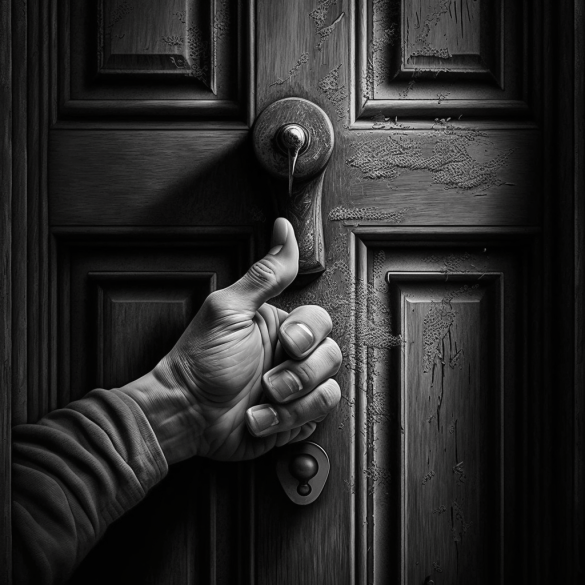
    And if this digital forest of possibilities still seems a bridge too far, well get your hat, go out and start knocking on doors to tell your story…

    One Man.

    For more reads :

  • No White Flags

    No White Flags

    I just returned from New Orleans where I met my fellow patient Steve Gleason. It was a remarkable and memorable encounter with a local hero, who s thoughts and ideas are an inspiration for everyone.

    They call their foundation Team Gleason, and a team it is… Overwhelmed by the love and energy surrounded in their home, my drive for patient empowerment is boosted with rocket power that hopefully leads to Steve’s desired journey to the moon.

    Not carrying a white flag, but armed with the wishes & demands of patients, who are already waiting for 144 years for clues that lead to a treatment for this ruthless disease, to plant there.

    You should all watch the documentary film about Steve’s and fellow patient Kevin Swan’s heroic tour to Machu Picchu, Peru, a true story with a “never give up” script and a cast of real friends, loving family and learn why Perseverance is written with a capital P.

    As from now I will carry No White Flags on my journey finding the way…

    One Man

  • Amsterdammed!

    Pfffff, what a weekend… First radio & TV interview and also swam 2013 meters through the Amsterdam canals. People get tired of doing less… 😉

    It is amazing to see how a positive flow can lead to great achievements, all started with a shocking campaign “I am already dead”, followed by a movement within the Dutch ALS community and beyond which has led to an increase of fundraising of almost 500% in just 2 years.

    This process of unification is one of a kind, you don t see very often and I have been part of it, I contributed to it and am very proud of it. The warm and welcoming support of all these contributing people, packed alongside the Amsterdam canals, is so overwhelming, it makes your adrenaline rise to unmeasurable levels where you just want to keep going….

    I have said it today on TV, we have put ALS on the map, but I just want to wipe it of the map and that’s the core of our target; to beat ALS and find a cure.

    But satisfied and tired I now say:

    Amsterdammed, we did it!

    One Man

  • A Billion for Bob

    A Billion for Bob

    Walking a million meters, running marathons, cycling 2,500 miles, swimming across the Channel, jumping out of airplanes, climbing mountains—just a few of the extreme challenges people undertake to raise awareness and funds for various diseases.

    Words alone cannot accurately describe the courage, strength, and exceptional effort these generous and caring people exhibit when they commit to achieving such ambitious goals for a worthy cause. Patients often take part as well; I myself have swum, cycled, and walked my way through various events in order to raise funds for ALS/MND.

    Many patients wish they could participate in these challenges, but simply can’t because of their condition. Oftentimes, their relatives and friends participate in their place. Rare diseases like ALS/MND fully depend on these crowd funding efforts to facilitate necessary research and care, and to spread awareness, as most government and pharmaceutical research funds go towards more big ticket, high-profile diseases.

    In the past weeks I have followed many events online and estimate that several hundreds of fundraising activities are initiated around the globe for my condition, and several thousands more for other rare diseases. As a results-driven entrepreneur, I always like to think about how we can do better? Because we always need to strive for something bigger, I was inspired by the words of a man recently diagnosed who said, “I would like to raise a billion dollars, a billion for Bob!” Well that’s certainly raising the bar high!

    Patients working together for the benefit of other patients has certainly been successful before; think of the huge amount of awareness and funds that have been raised in support of HIV. But can money buy everything? Suppose we were to have $1 billion—where would we start? Who would decide how it was spent? Nowadays patients are well informed and can judge for themselves whether certain expenditures make sense or not, but not many are involved in these decision making processes…something I do think should change.

    The Dutch are straightforward people and as such, I like to put my money where my mouth is. That’s why I initiated project MinE. We have to start with unraveling the mystery of our disease. When you want to kill a weed, you have to pull it out by the roots or it’s bound to come back! The scope of Project MinE is bigger and more ambitious than all of the current research funds being spent on ALS/MND worldwide, crowdfunded, open access, so everyone can be involved in Project MinE.

    I hope soon to initiate a larger effort to combine our forces, a “One Man” campaign, by patients and for patients, assisted by all these amazing men and women around the globe doing extraordinary things in order to achieve our common goal.

    Meanwhile, keep on running, swimming, walking, cycling, hiking, cooking, jumping, climbing, canoeing, racing, skydiving and…achieving!

    One Man

    MinE, Make it yours!